Beyond the Skid Marks: How an Accident Reconstruction Expert Uncovers the Truth in Personal Injury Cases

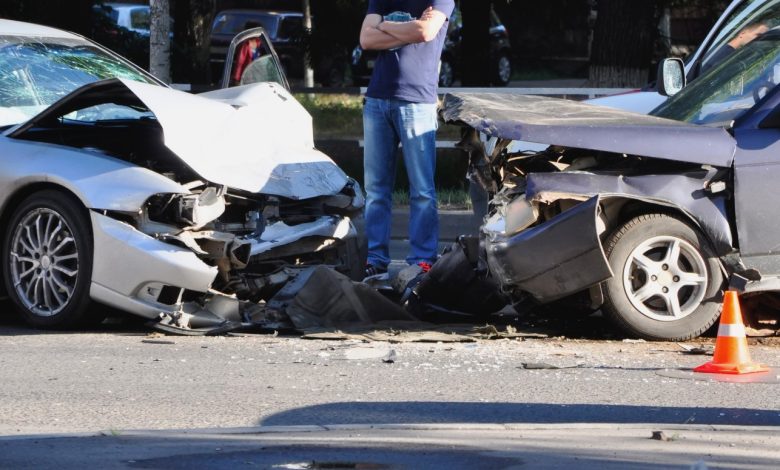
When a severe collision occurs, the immediate aftermath is often defined by chaos, conflicting memories, and incomplete information. Drivers may be disoriented, eyewitnesses often see only a fraction of the event from a limited angle, and police reports frequently capture just a surface-level snapshot of the scene. In personal injury litigation, where financial responsibility and fair compensation hinge on proving exactly how an incident happened, guesswork is simply not enough. This is where an accident reconstruction expert steps in, bridging the gap between a confusing crash scene and clear, scientifically backed answers.
What Is an Accident Reconstruction Expert?
An accident reconstruction expert is specialized professional often holding advanced degrees in mechanical engineering, civil engineering, physics, or law enforcement investigation—who uses scientific principles to determine the cause and mechanics of a collision. Rather than relying on speculation or subjective narratives, these specialists treat a crash site like a complex physics problem. They examine physical evidence, environmental factors, and mechanical data to work backward from the final resting positions of the vehicles to the exact moments before impact.
While most commonly associated with severe automobile, trucking, and motorcycle collisions, reconstruction experts also lend their expertise to pedestrian strikes, bicycle accidents, workplace machinery failures, and premises liability incidents. Their primary objective is not to advocate for one side or the other, but to establish an objective, scientifically sound timeline of events that can withstand intense scrutiny in a courtroom.
The Science Behind the Investigation
Reconstructing an accident requires a meticulous, multi-layered investigation that begins as soon as the expert is retained. Time is a critical factor, as physical evidence at a crash scene can degrade or disappear within days. Experts typically conduct an on-site inspection to measure road grades, evaluate pavement friction, document sightlines, and check traffic signal timing. Even subtle details, such as the angle of the sun at a specific time of day or a partially obscured road sign, can play a decisive role in understanding why a collision occurred.
Alongside the physical site, the vehicles themselves serve as vital sources of data. Reconstructionists inspect vehicle damage profiles to calculate the principal direction of force and the energy absorbed during the crash. Modern vehicles also contain Event Data Recorders, commonly known as black boxes, which capture crucial metrics in the seconds leading up to an impact. By downloading and interpreting this data, an expert can determine a vehicle’s exact speed, throttle position, brake application, steering input, and seatbelt usage, providing an indisputable digital footprint of driver behavior.
Translating Complex Physics for the Courtroom
Gathering technical data is only half of an accident reconstruction expert’s job; the other half is communicating those findings clearly to people without engineering backgrounds. Judges, jurors, and insurance adjusters must be able to grasp the significance of momentum calculations, crush measurements, and trajectory angles in order to make informed decisions. A brilliant analysis loses its impact if it is buried under dense technical jargon.
To make their conclusions accessible, reconstructionists often collaborate with forensic animators to create scaled diagrams, three-dimensional laser scans, and scientifically accurate computer simulations. These visual aids allow a jury to view the collision from multiple perspectives, including a bird’s-eye view or the exact line of sight of each driver. By pairing clear, plain-language testimony with compelling visual demonstrations, the expert transforms abstract mathematical formulas into a coherent story that resonates during settlement negotiations and trials alike.
Conclusion
Personal injury cases are ultimately about accountability and helping injured individuals recover what they have lost due to someone else’s negligence. Yet without reliable evidence, even the most deserving claim can face insurmountable obstacles. By combining engineering principles, advanced technology, and objective analysis, an accident reconstruction expert brings order to the chaos of a crash scene. Their work ensures that legal outcomes are driven by verifiable facts rather than guesswork, giving attorneys, courts, and injured victims the clarity they need to pursue justice with confidence.